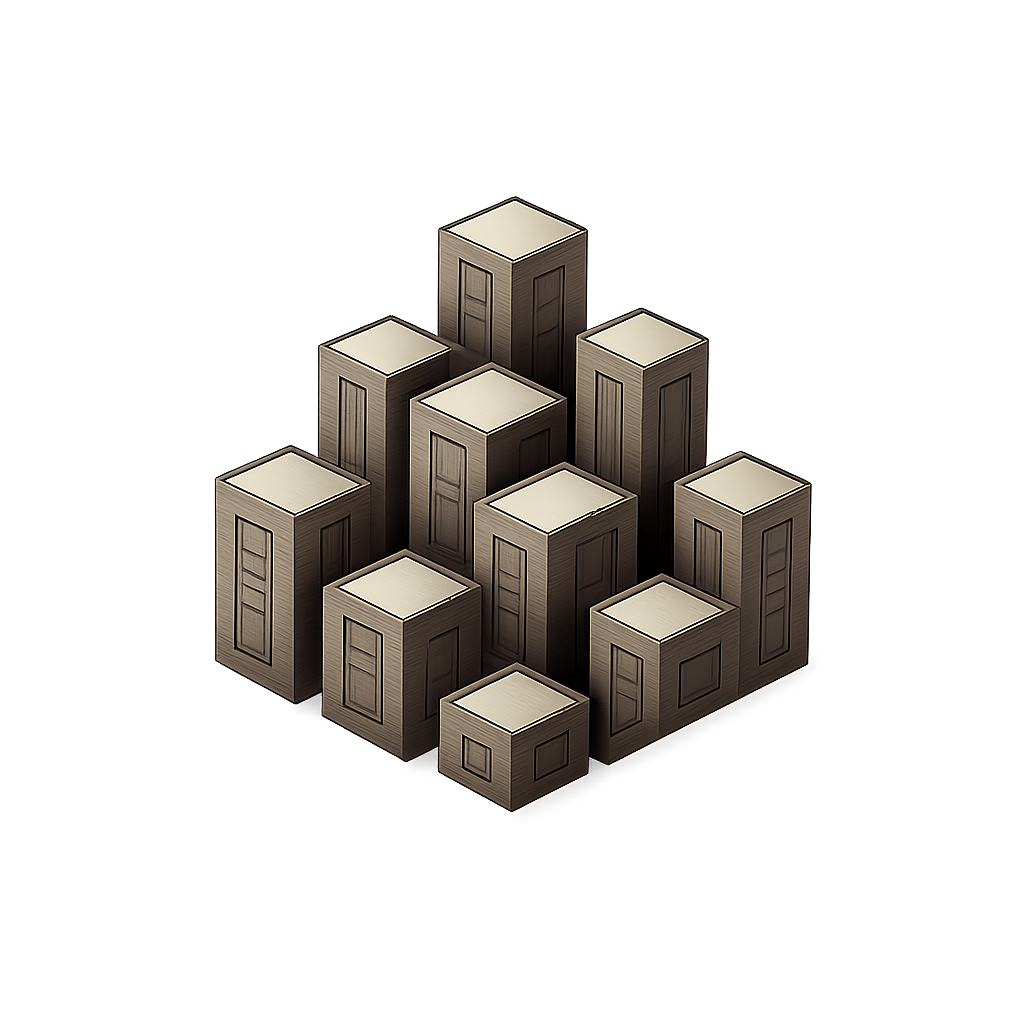
 KnowledgeMap
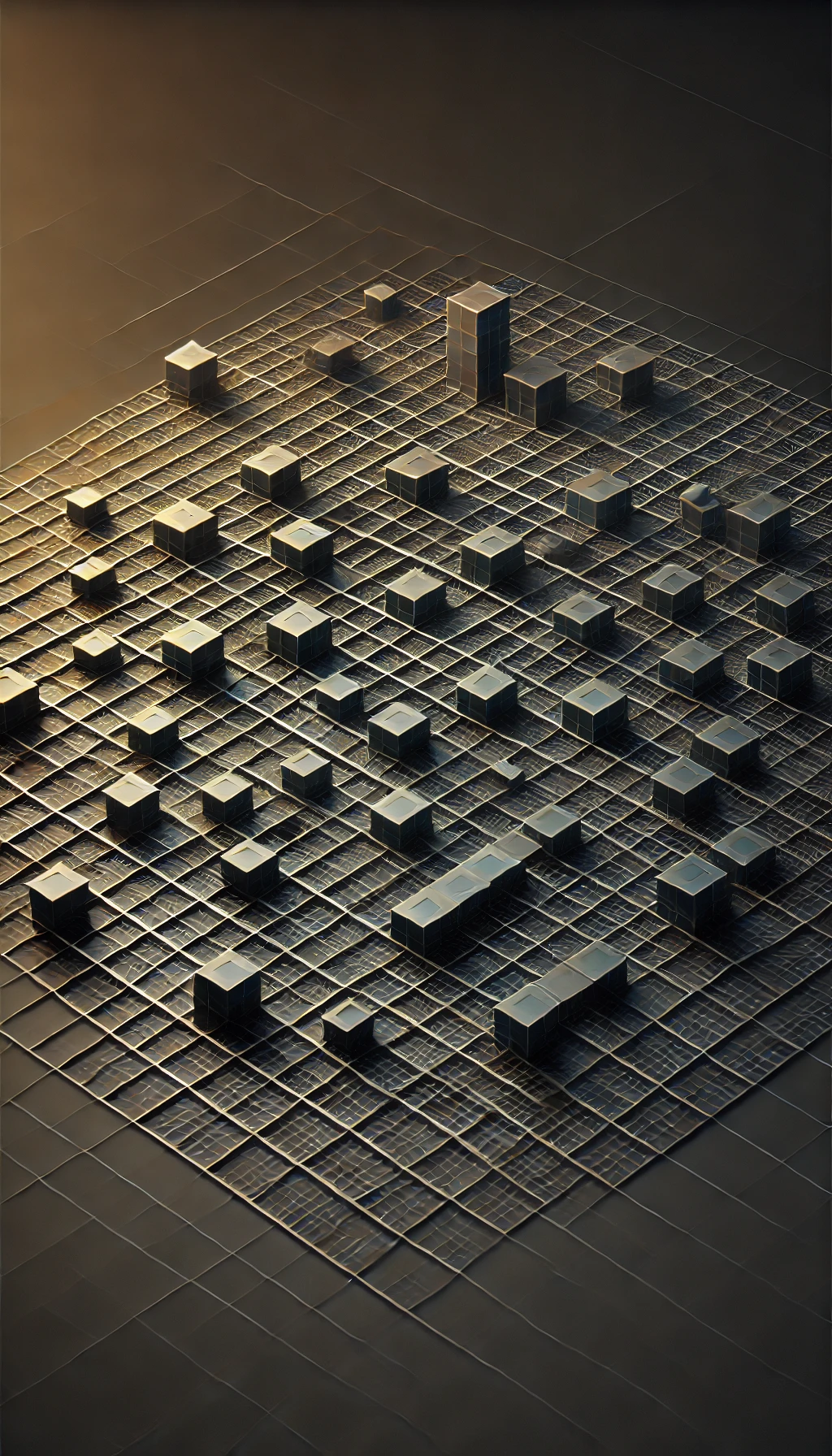


KnowledgeMap is a 3D, grid-based visualization component that turns documentation and knowledge graphs into a navigable “city”.
It is domain-agnostic: you can map software architectures, product landscapes, research areas, compliance topics, onboarding knowledge, or anything else that benefits from clear boundaries + interactive navigation.
Built on deck.gl – no OSM, no GPS, no map tiles. This is a synthetic world.
What it does
KnowledgeMap renders a structured knowledge space as a city-like scene:
-
World (Grid) A discrete grid world. All elements snap to cells → stable layouts, deterministic diffs, reviewable changes.
-
Cities (Categories / Domains / Areas) High-level categories. Cities define scope boundaries and provide an anchor for navigation and theming.
-
Districts (Sub-areas / Components / Capabilities) Sub-structure inside a city. Districts represent coherent clusters (modules, features, topics, teams, etc.).
-
Buildings (Knowledge Entities) Individual entities, typically backed by Markdown. Buildings can carry metadata (owner, tags, maturity, risk, references, etc.).
-
Height encodes relevance Building height can reflect importance/relevance:
- curated manually, or
- derived from metrics (e.g., centrality, usage, incident frequency, dependency fan-in)
-
Roads / Pipes (Flows) Animated routes visualize how information, responsibility, or dependencies move through the landscape. This is not “static arrows”; it’s flow you can see.
Why a “knowledge city”?
Classic docs and graphs are great at listing facts but bad at:
- making boundaries obvious
- showing flows and integration surfaces
- giving teams a shared spatial memory (“where does this belong?”)
A city metaphor is a pragmatic trick: people remember places better than nested menus and graph hairballs.
Key properties
- Grid-first: deterministic coordinates, versionable maps, stable mental model
- Separation of concerns:
- map structure as data (JSON)
- entity content as docs (Markdown)
- Interactive navigation: focus, hover meta, deep links, jump-to-entity
- Theming: color and styling per city/district (with restraint, please)